Weird and Wonderful Pilot Chats Programme Winter 2022 | Session 1 | Scout (Fighter) Development WW1, 1914-1915
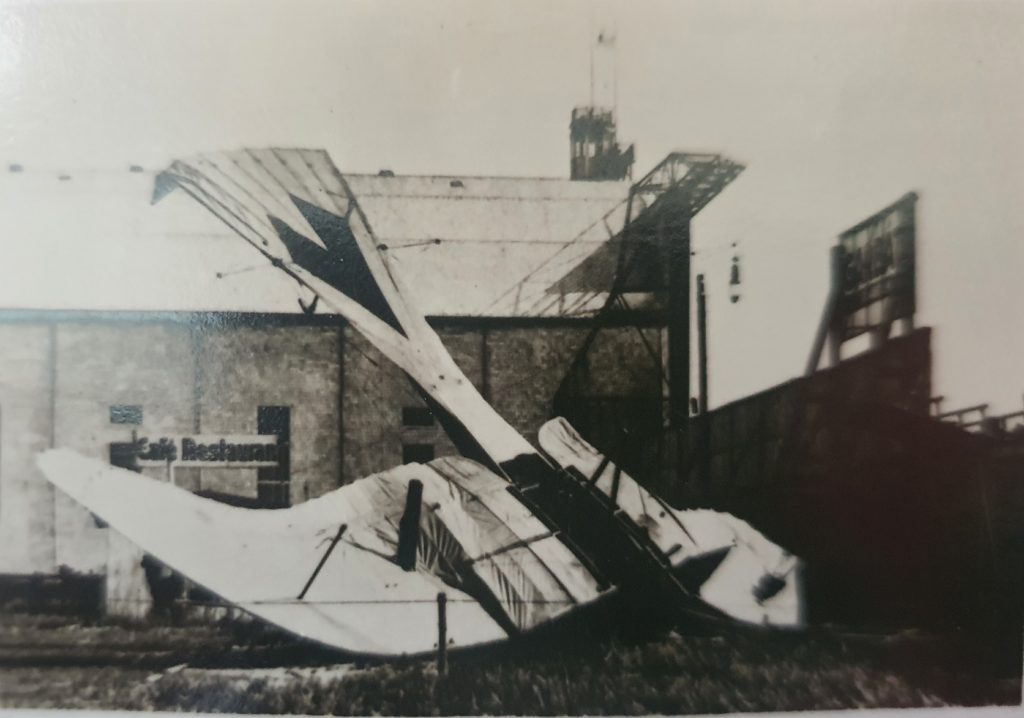
Some amazing aeroplanes made it to Northern France at the start of WW1. None of them were armed. The idea of air combat grew as they found themselves in the same air space wishing to deny the other side uninterrupted reconnaissance. Pistols, rifles, even grappling hooks lowered on a rope were the first attempts to engage the enemy. By 1915, machine guns had made an entrance but the spoils went to the Eindecker as the first flying gun firing through the propeller achieving the its first kill in July 1915. From them on it was mayhem until the allies found the answer in early 1916. Our Panel of expert pilots who regularly such aircraft will debunk the myths.
Find out more with our Panel of WW1 aviation experts on Thur 13th Oct at 1930 UK.
The whole Programme can be found here.
WW1 Scout (Fighter) Development, 1914-1915
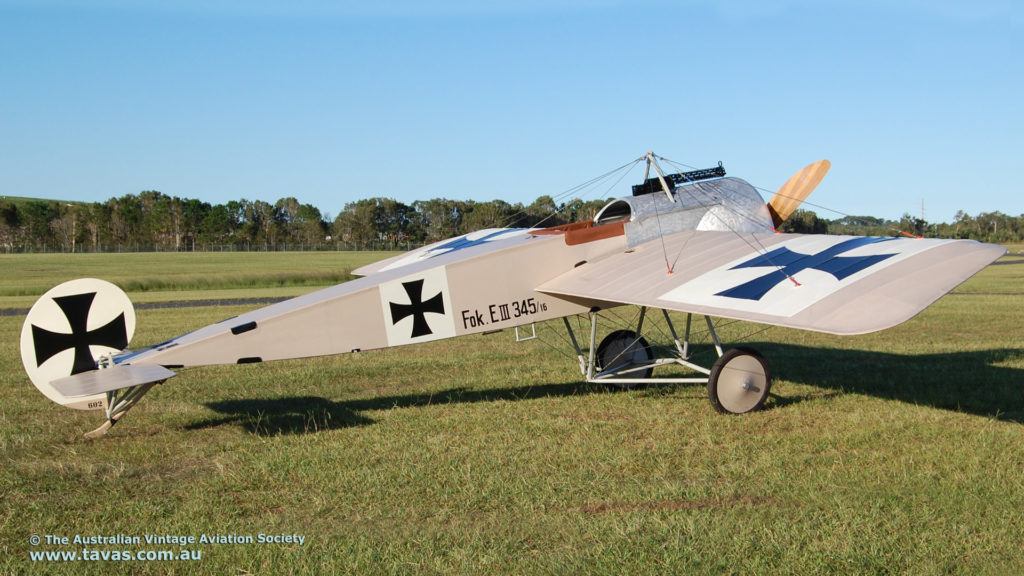
Almost everyone has heard of the Fokker Scourge and the impact that the Eindecker had on the battle for control of the air over N France for the 12 months from mid-1915. By the middle of 1916 the Allies had stepped through the next technical evolution with the Nieuport 11 and the DH2. However, their impact was not felt fully till the Spring of 1916. The Eindecker had a big engine and a forward firing machine gun which was used to devastating effect on allied aircraft.
Find out more on Thur 13th October at 1930 UK. They will be held on Zoom @£5 per ticket.
All funds raised will help the Trust aircraft to keep flying.
The full Programme of Chats this Winter can be found here
WW1 AHT Winter Chats Programme 2022 | Session 1 | Scout Development WW1, 1914-1915
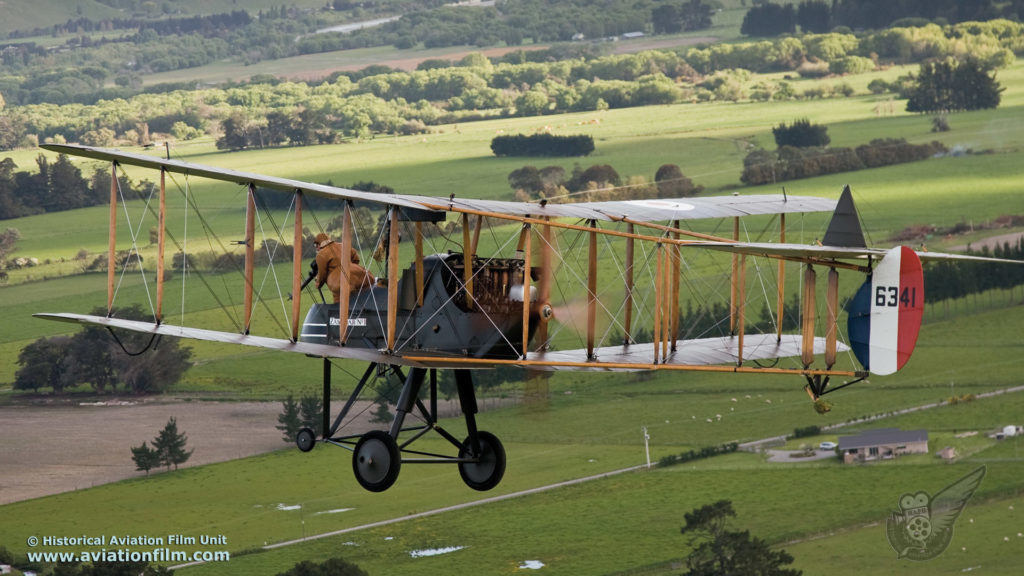
One of the more bizarre early Scout aircraft was the massive (48ft wingspan) pusher FE2b. Its design reflects the early quandary about forward firing and rearward protection. The pilot sat in the rear cockpit and the observer gunner moved his heavy MG to fire from a mount on the front of the cockpit or on a pole facing backwards. All this with the flimsiest of restraint for the gunner. The ‘Fee’ was an early counter to the Eindecker along with the Bristol Scout in 1915. Learn more during our discussion about how they got on in the first years of the Great War on Thur 13th Oct at 1930 UK.
Tickets for the first Chat session on Thursday 13th Oct at 1930 can be found at this link.
The whole Programme can be found here.
WW1 Scout (Fighter) Development, 1914-1915
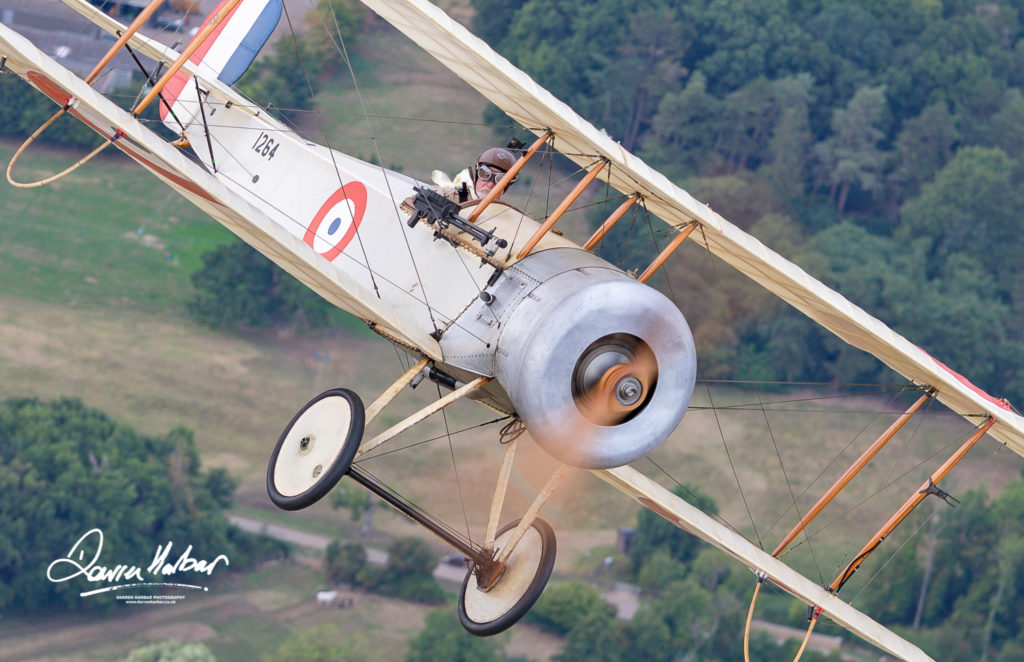
To understand the development of the Scout (Fighter) aeroplanes in WW1, you have to understand the air concepts of the day and the fragility of their craft at the onset of the War. Aeroplane v aeroplane was far from their thoughts. The early designers were merely trying to elevate a cavalry reconnaissance officer to a greater height so that he could observe more. It was felt he could do this more effectively from the front cockpit leaving the aircraft defenceless from rear attack. Find out more about the first true (Bristol) Scout and its challenges without a forward firing gun. All this will be revealed and more on Thursday 13th Oct at 1930 BST. They will be held on Zoom @£5 per ticket. All funds raised will help the Trust’s aircraft flying.
Tickets for the first Chat session on Thursday 13th Oct at 1930 can be found at this link.
Rotary Engines – Operations and Technical
The WW1 AHT pilots and friends invite you to join a chat session on rotary engines as they developed in WW1. Jean-Michel Munn will be leading the chat having been the Trust’s pilot flying the Sopwith Snipe when it was in the UK 2015 – 2017. The Snipe is powered by the Bentley BR2a – W O Bentley’s finest design. With the cylinders rotating a round a fixed crankshaft, the gyroscopic effect requires some unexpected control inputs to maintain the chosen flightpath. It has no throttle and could be a challenge to slow down for landing or catch up in a formation for the newly arrived pilot. The power weight ratio was much improved over the inline engines of the time even if it did consume massive amounts of Castrol R when running – leaving most of the oil on the fuselage.
Join the WW1 AHT pilots and friends for a chat session on Thur 3rd Mar 22 at 1930 to find out more
Under the Skin of the Albatros DVa – Thur 3 Feb 22 1930
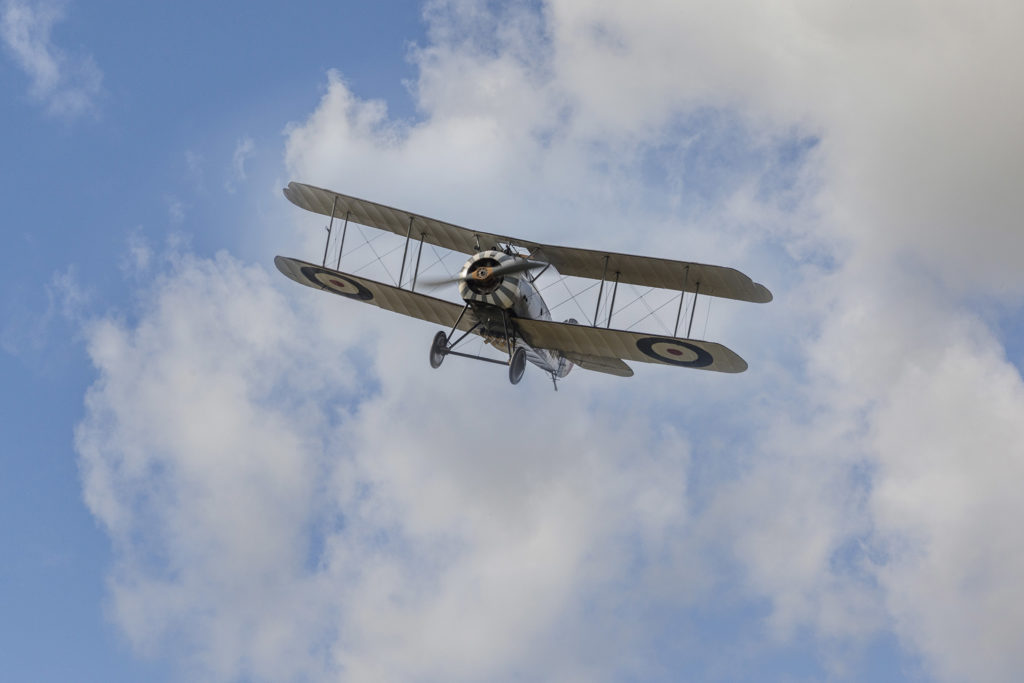
The WW1 AHT will gather for their 9th chat session this time looking at the most famous Fighters to emerge from the Albatros FlugZeugWerke – the DI through to the DVa that the Trust operates. We will be joined again by Dodge Bailey from the Shuttleworth, John Lanham from TVAL and Scout Builder David Bremner. The evolution of the Albatros Fighters gives a fascinating insight into how the early German aircraft designers identified and solved problems. Few would argue that the DIII was the most successful of the type arriving at the front in late 1916 ahead of the DH2 replacements like the SE5, F2b, and Sopwith Pup. The DIII’s performance was responsible for huge allied losses in the Battle of Arras in April 1917.
Want to know more, join us on Thur 3 Feb 22 at 1930 and help us keep our aeroplanes flying.
Under the Skin of the BE2
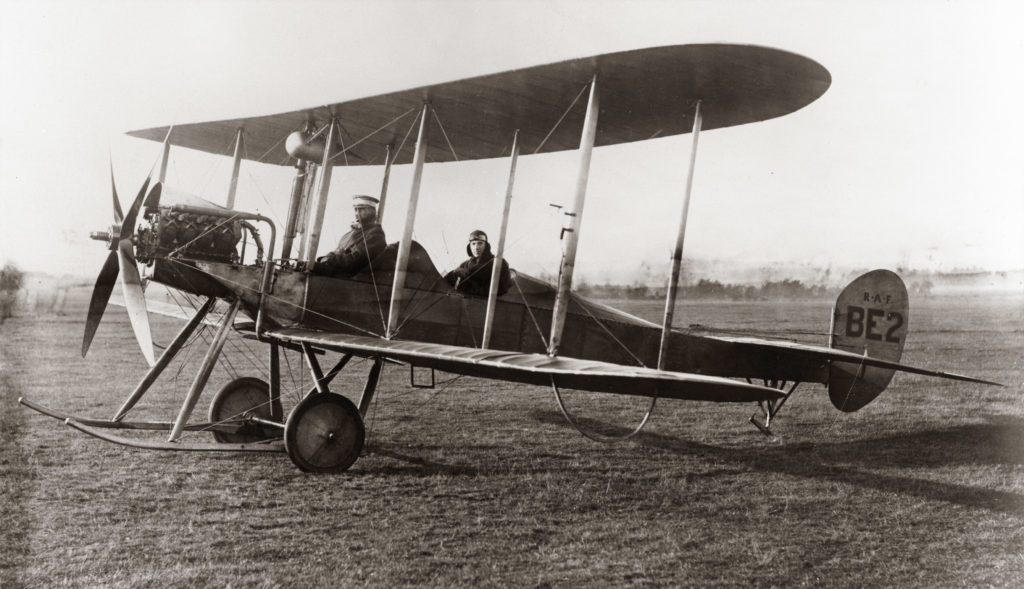
In this Chat Session on Thur 6th Jan 22 at 1930 (UK), the WW1 AHT pilots will be joined by experts on the BE2, Paul Hare and Andrew Willox, to discuss the evolution of the very early flying machines into the BE2. It was first aircraft to be designed with production and assembly in mind. Although we perhaps diminish its stately level flight speed of 55 mph and its reliance on many bracing wires for rigidity, it was way ahead of its time and more than half of the fledgling RFC element of the BEF that deployed to France on 13th August 1914 were BE2s. As well as the early history, the pilots will dissect the aeroplanes technical and operational performance.
These Chats help the Trust to keep our BE2 flying so if you would like to join us in the New Year, please click on this link.
4 Hours to go – Thur 4th Nov 7.30pm. WW1 Fighters Compared
On Thur 4th Nov at 1930 on Zoom, the WW1 AHT Pilots led by Jean-Michel Munn and Stu Goldspink assisted by David Bremner will talk about the different WW1 Fighter that they have flown. This will be the first in the new programme of chat sessions that the Trust will run monthly for the winter months on the last Thursday of each month after the first one. Get the dates in your diaries. The Full programme can be found here. While the chats are fascinating in their own right, you will be contributing to the Trust’s continuing efforts to keep their WW1 aeroplanes flying.
In this session, they will discuss the Bristol Scout, DH2, Sopwith Pup, Nieuport 17, Bristol Fighter, SE5a, Sopwith Camel, Albatros Dva, Sopwith Snipe, Nieuport 28.
If ever an aeroplane owed its place in history to the men who flew it, then that aeroplane was the Nieuport 28. Surely one of the most elegant-looking warplanes of the war, the Nieuport 28 was enjoyable to fly but was far from outstanding in the performance stakes and plagued by serious design problems. Passed over by the French, it became the first operational fighter to equip the American Expeditionary Force in 1918 mainly because there was a shortage of SPAD XIII fighters at the time. Its wing fabric-shredding tendencies and volatile Gnome-Monosoupape engine notwithstanding, the Type 28 was generally well-liked by its American pilots; several of them, such as Eddie Rickenbacker and Douglas Campbell, scored a number of victories flying these aeroplanes.