image
Lieutenant W Leefe Robinson VC RFC
“For most conspicuous bravery. He attacked an enemy airship under circumstances of great difficulty and danger, and sent…
Year Range
The Fokker Scourge, Verdun and the Somme. The aircraft and early air battles of 1915-16, when the fighter aeroplane came of age.


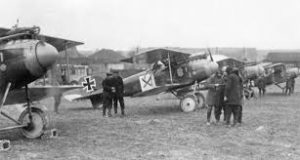
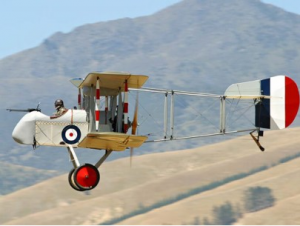
The ground offensives mounted by both sides during the latter months of 1915 had failed to unlock the deadly stalemate of trench warfare; deployment of extreme measures such as the use of flamethrowers and phosphene gas had done little other than add to the wholesale slaughter. Above the blood-soaked battlefields German Fokker pilots maintained their supremacy. So critical had the RFC’s situation become that the hard-pressed BE squadrons were having to be escorted for protection. ‘Top cover’ was provided by small numbers of Vickers FB5 pusher biplanes; although neither as fast nor as manoeuvreable on the Eindeckers, these two-seaters armed with a flexible Lewis machine gun in the front cockpit proved an effective deterrent. Fokkers were never numerous at the Front, being parceled out to reconnaissance units in limited numbers, their pilots operated on something of a ‘roving commission’ basis. The perceived ‘Fokker Scourge’ had reached its zenith by January 1916 but things were about to change.
“For most conspicuous bravery. He attacked an enemy airship under circumstances of great difficulty and danger, and sent…
Lionel Rees had an amazing career fighting in both Wars and ending up in the Bahamas where he…
The King has been graciously pleased to approve of the grant of the Victoria Cross to Squadron-Commander Richard…
For most conspicuous bravery, skill and determination, on 7th November, 1915, in France. He was patrolling in a…
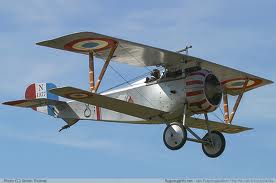

Lanoe Hawker was a remarkable individual, inspiring leader, and a tireless innovator. It is hard to believe that…