Show and Tell: Sopwith Snipe Control Grip
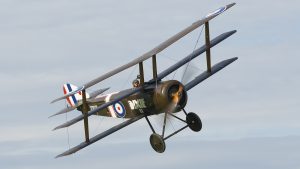
This is a Sopwith Snipe control grip and pretty much in line with British grips throughout the 2 wars with two slight…
Read chapterThe Story of Air Power
How aviation evolved through the Great War — told year by year, theme by theme.
With thanks to Ray Rimell
The Story of the Evolution of Military Aviation

When the British Expeditionary Force deployed to France in August 1914, the Royal Flying Corps contingent comprised four squadrons equipped with a mixed complement of over 40 machines. It took three days for them all to cross the English Channel – a mere six years after Louis Blériot’s first historic flight. By the end of ‘The Great War’, there were over 22,000 Royal Air Force aeroplanes serving with 188 squadrons. The pace of the war had seen aircraft of all combatants develop from frail ‘spotters’ to high performance fighters and enormous multi-engined long-range bombers. The pilots, their training, and the leap in technical breakthroughs (such as the forward-firing synchronised machine gun) all led to rapid evolution of tactics and competing technologies that influenced the ebb and flow for control in the air between the Allies and the Central Powers. This continual development and counter-development, when combined with the courage and determination of fliers from all nations, provides the thrust of a truly remarkable story which unfolds in each year of the Great War Centenary…

If you would like to share the story of a relative from the Great War, we would be glad to hear it. Send us your family story.
This is a Sopwith Snipe control grip and pretty much in line with British grips throughout the 2 wars with two slight…
Read chapterThis is the standard German ignition switch/key assembly. This item was a standard feature in all German aircraft during WWI. It came…
Read chapterThis little wooden box was suspended by rubber cords either between the struts or, somewhat more aerodynamically efficient behind the seat. It…
Read chapterControl grip from a Fokker DVII (Paul Ernst Strähle) Some years back my other mentor and dear friend the late Paul Ernst…
Read chapterThe Victory Goblet German awards came in quite a variety of forms. Your 1st confirmed aerial victory resulted in the award of…
Read chapterStadia Range Indicator Today I will start with the infamous Stadia range indicator. This piece of practical ingenuity survived the great war…
Read chapterIn the early years of the war when the art of bombing was still in its infancy this simple mode of attacking…
Read chapterAviation Instruments At first the Germans did not feel there was any need for crowding a cockpit with unnecessary things such as…
Read chapter 
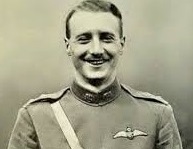
Dick Forsythe’s Grandfather awarded Distinguished Flying Cross London Gazette: 2/7/1918:7746 Within the past month (June 1918) this officer has been successful…
Read chapter
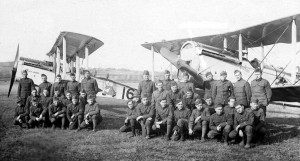

The London Gazette (Supplement), 8 June 1917, issue 30122, page 5703 For most conspicuous bravery and devotion to duty during an aerial…
Read chapterFor most conspicuous bravery, endurance and skill when, attacked at an altitude of 9,000 feet, the petrol tank was pierced and the machine…
Read chapter