In 1962 a man sat his fourteen-year-old grandson down and told him what it had been like to go solo in 1916.
It was the only time they ever discussed his war.
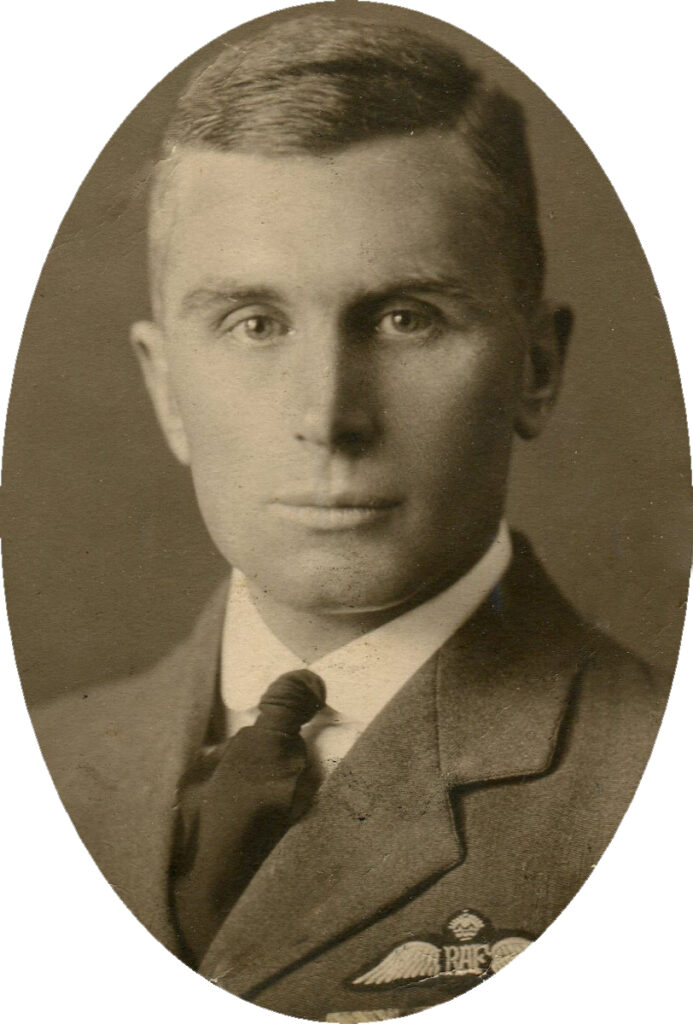
The grandson was Dick Forsythe, who is now our Chief Trustee. The grandfather was Allan Churchman — later Air Commodore Churchman, but in 1916 simply another trainee at Upavon waiting his turn on the flightline.
And Dick notes what makes that single afternoon stranger still: his grandfather served in both wars. A lifetime in uniform, and one telling of it.
This is his account, as it was passed down.
What “going solo” meant in 1916
Get airborne. Fly a circuit. Land.
That was the whole of it. Add a figure of eight and you qualified for a pilot’s licence.
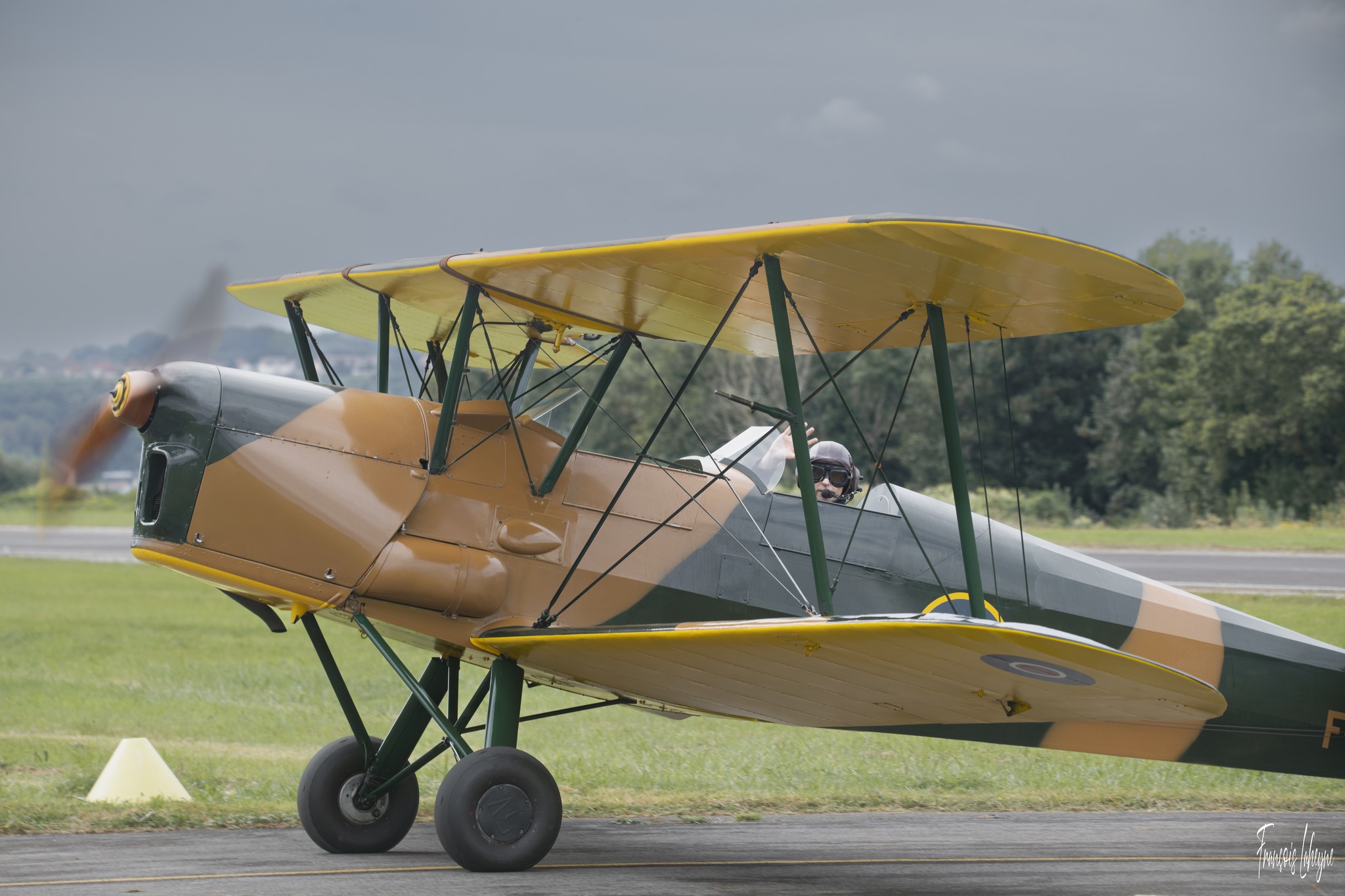
The trainees were lined up in column. A Warrant Officer blew a whistle and pointed at one of the Maurice Farman Longhorns, and the man at the head of the queue walked out to it. The aircraft were parked at the downwind end of the airfield so that they could take off without taxying.
The Longhorn had a conventional Renault engine, but you slowed it with a blip switch that cut a bank of cylinders. There was no throttle in the sense a modern pilot would recognise.
Eventually the whistle blew and the Warrant Officer pointed at Churchman.
The first attempt
He got in, and he took off, and all was well until the approach.
The technique was a series of swoops — blipping the power off and on to shed height and speed, which called for fine judgement, because the engine was slow to answer. The object was to arrive a foot above the ground, near the stall, and let the aeroplane land itself.
Judging height is hard until you have learned the perspective. He rounded out at about fifteen feet.
The aeroplane hit the ground and the wings came off. He was unhurt. A vehicle arrived, collected the pieces, and took them away to the Royal Aircraft Factory for repair.
He walked back to the line of waiting pilots and took his place to have another go.
The second
No better than the first.
This time the Warrant Officer beckoned him over and told him that if he crashed again he would be going back to the trenches.
The third
Fortified by a slug of the Warrant Officer’s brandy, he tried again.
He must have managed it, because he retired in 1952 as an Air Commodore.
What came after
Churchman commanded two squadrons. One of them was No. 16 Squadron, which in 1932 was flying the Armstrong Whitworth Atlas.
In 1958, No. 16 Squadron was commanded by Dick’s father, flying Canberras.
And fifty-one years after his grandfather crashed a Longhorn at Upavon, Dick flew his own first solo, in a Chipmunk at Cranwell.
Three generations. Two of them in the same squadron. The thread runs from a training aeroplane with its wings lying beside it on the grass at Upavon, to the aeroplanes we keep flying today.
He was awarded the DFC in 1918
Churchman’s Distinguished Flying Cross came in the summer of 1918, for directing artillery fire from the air — no dogfight, no burning aeroplane, just difficult work done carefully and over and over, and being useful to the men on the ground.
Within the past month (June 1918) this officer has been successful in rendering very valuable services in directing our artillery fire on enemy positions. Owing to his skill and judgement on many occasions concentration of our fire has been brought on enemy batteries with such precision that great damage was effected
The London Gazette, 2 July 1918, p. 7746
His full story is here: Lt/T/Capt Allan Churchman RAF.
Dick’s question, and it is a real one
“Have you got a family story about flying in WW1 that you would like to share?”
Churchman is on this website because his family sent him to us.
If you have a grandfather, a great-uncle, a name in a drawer with a photograph you have never been able to place — tell us about them. We would like to know.